CR™—CLINICAL RELEVANCE of Dr. Yoko Kato’s talk on “Life Lessons for Young Neurosurgeons, How to Reach Success”
 ZOOM LINK: https://us06web.zoom.us/meeting/register/0GPu5hLCQdWnm5RpYnUVlA
https://us06web.zoom.us/meeting/register/0GPu5hLCQdWnm5RpYnUVlA
™—CLINICAL RELEVANCE
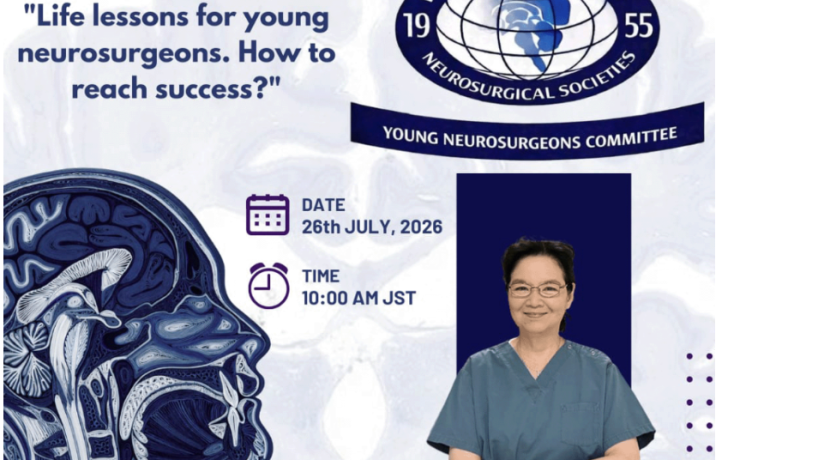
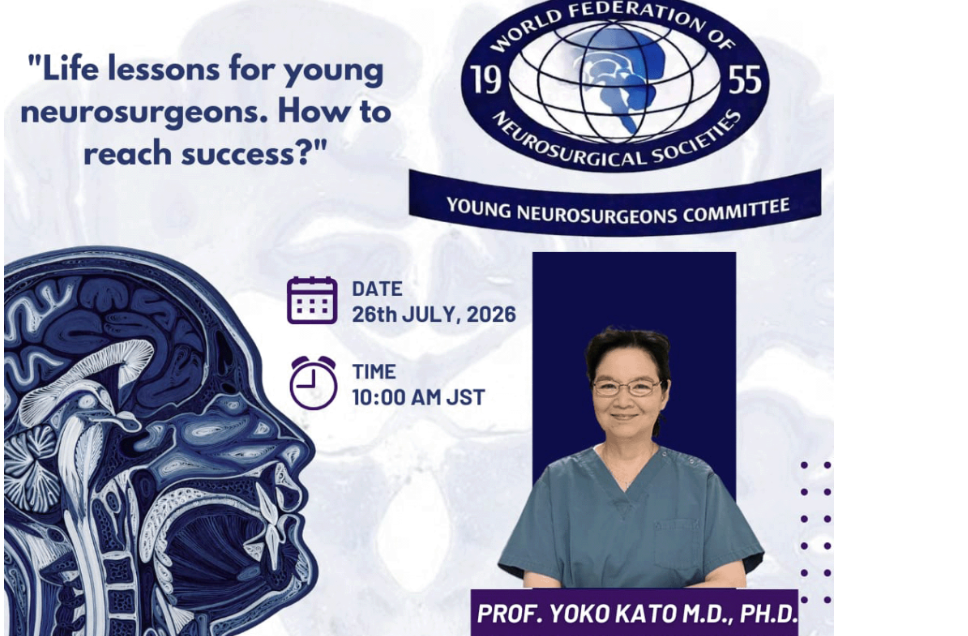
Dr. Yoko Kato Presents
“Life Lessons for Young Neurosurgeons: How to Reach Success”
Sunday, July 26, 2026 — 10:00 AM Japan Time
- Miami/New York (EDT): Saturday, July 25 — 9:00 PM
- Los Angeles (PDT): Saturday, July 25 — 6:00 PM
- London (BST): Sunday, July 26 — 2:00 AM
Dr. Yoko Kato’s career offers young neurosurgeons an exceptional model of how clinical excellence, perseverance, mentorship, leadership, and service can shape a successful professional life.
As a pioneering cerebrovascular neurosurgeon and the first woman in Japan promoted to full professor of neurosurgery, Dr. Kato overcame significant professional and cultural barriers while developing international recognition in the surgical treatment of cerebral aneurysms and arteriovenous malformations. Her experience with more than 1,800 aneurysm-clipping operations provides a powerful foundation for discussing the discipline, preparation, judgment, technical development, and lifelong learning required to become an accomplished neurosurgeon.
Why This Presentation Is Clinically Relevant
1. Developing surgical mastery
Neurosurgical success is built through repetition, anatomical knowledge, careful preparation, honest evaluation of complications, and continuous refinement of technique. Dr. Kato’s extensive cerebrovascular experience demonstrates that surgical expertise develops over an entire career rather than through isolated technical achievements.
2. Making responsible clinical decisions
Young neurosurgeons must learn not only how to operate, but also when surgery is appropriate, when another treatment may be safer, and when intervention should be avoided. Her career emphasizes judgment, patient selection, complication prevention, and placing the patient’s welfare above personal ambition.
3. Learning from mentors—and becoming one
Dr. Kato has devoted much of her career to teaching neurosurgeons internationally, particularly in countries with limited educational and technological resources. Her example illustrates how mentorship can improve operative confidence, expand access to expertise, and strengthen neurosurgical care across generations.
4. Building resilience
A neurosurgical career includes long training, demanding operations, complications, criticism, fatigue, professional competition, and occasional failure. Dr. Kato’s journey shows the importance of persistence, humility, emotional strength, and the ability to learn constructively from setbacks.
5. Creating opportunities for women in neurosurgery
Through the Women’s Neurosurgical Association of Japan and the Asian Women’s Neurosurgical Association, Dr. Kato has helped increase the visibility, mentorship, and professional advancement of women in surgery. Her experience is clinically important because diverse and inclusive training environments strengthen teams, expand the neurosurgical workforce, and improve access to care.
6. Understanding that success includes service
Her work supporting neurosurgical education in developing countries demonstrates that professional success should not be measured only by titles, publications, or operative numbers. It should also be measured by the number of people taught, patients helped, barriers removed, and future leaders developed.
Central CR™ Message
Dr. Yoko Kato’s life teaches young neurosurgeons that lasting success comes from combining technical excellence with clinical judgment, perseverance, mentorship, ethical responsibility, generosity, and service to others.
This presentation is not simply a biography of a distinguished surgeon. It is an opportunity for residents, fellows, medical students, and young consultants to consider what type of neurosurgeon—and what type of person—they hope to become.
 Author: desertedbeach