PCMC Performs Philippines’ First Pediatric Deep Brain Stimulation Surgery
PCMC Performs Philippines’ First Pediatric Deep Brain Stimulation Surgery
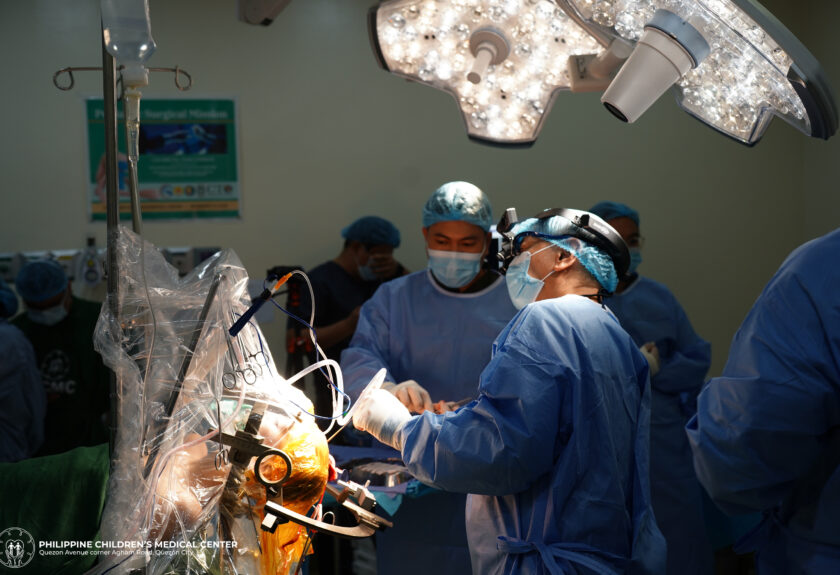
The Philippine Children’s Medical Center (PCMC) has performed the Philippines’ first pediatric deep brain stimulation (DBS) surgery for a 14-year-old patient with DYT-TOR1A dystonia, a genetic movement disorder that causes involuntary muscle contractions and abnormal movements.
A multidisciplinary PCMC team led by pediatric neurosurgeon Dr. Jose A. Aguilar performed the procedure on July 15, 2026. The more than eight-hour surgery involved implanting electrodes in targeted areas of the brain responsible for movement, connected to a rechargeable device implanted under the skin of the patient’s right chest.
Nathalie began experiencing symptoms at age six, initially dragging her left foot and having difficulty writing. Her condition progressively worsened, eventually leaving her wheelchair-dependent and largely confined to bed. Despite medications, botulinum toxin injections, pain management, and rehabilitation, she continued to experience severe muscle spasms, pain, and difficulty with daily activities.
She was referred to Dr. Madelyn P. Pascual, a pediatric movement disorder neurologist with specialized training in pediatric DBS, in August 2025. Following assessment, the PCMC team determined that DBS could provide potential benefit.
The procedure involved specialists from Neurosurgery, Pediatric Movement Disorder Neurology and Neurophysiology, Rehabilitation Medicine, Pediatric Anesthesiology, Neuropsychology, and other supporting services. Nathalie was awake during electrode placement, allowing the team to assess her responses to stimulation and confirm the appropriate target.
“Deep brain stimulation surgery in children offers challenges in terms of hardware implantation in a small patient and in the precise placement of the electrodes,” Dr. Aguilar said. “This is the first deep brain stimulation surgery done in a pediatric patient in the Philippines, and this marks the current capability and availability in the country of this complex and effective surgical treatment for Filipino children with movement disorders like dystonia.”
Dr. Pascual emphasized the importance of careful patient selection, realistic treatment goals, and multidisciplinary preparation in pediatric DBS. The team also used a newer, smaller rechargeable DBS device suited to Nathalie’s size, with a battery service life of at least 15 years.
Nathalie was discharged on her third day after surgery and continues to receive follow-up care, DBS adjustments, and rehabilitation at PCMC. Her family has reported significant improvements: her severe pain has subsided, muscle spasms have become less frequent, and she can now use both hands more effectively, move her legs with greater control, bathe independently, and sit more upright. She is no longer taking pain medication.
She continues her studies through modular learning while recovering and hopes to return to school.
“Sana matulungan ko si Mama sa chores, makapasyal-pasyal, at makapunta sa school nang mag-isa na lang,” Nathalie said.
The DBS device had previously been estimated to cost approximately ₱1.2 million. Through PCMC’s assistance and social service mechanisms, Nathalie’s family was able to proceed with the procedure.
PCMC Executive Director Dr. Cecilia O. Gan said the milestone reflects the hospital’s commitment to expanding access to specialized care for children with complex conditions.
“This milestone reflects PCMC’s commitment to providing advanced and compassionate care to children with complex conditions. More than a medical achievement, it gives Nathalie a chance to regain independence and look forward to a better quality of life. This is what we mean by Basta Bata, PCMC! —putting every child at the heart of what we do,” Dr. Gan said.